|
The Polisario has no other choice but to accept the Moroccan autonomy project (Lebanese writer) 7/8/2008
The Polisario could never create an independent State in the Sahara and has no other choice but to adhere to the autonomy project for the southern provinces of Morocco, has stated the Lebanese writer and political scientist, Khair allah Khair Allah. In an article published Monday by the Lebanese newspaper « Al Moustakbal”, Khair Allah has confirmed that ” Algeria has no interest in closing its borders with Morocco, and particularly in supporting the Polisario which could never create an independent State in the Sahara,

|
|
|
Portugal welcomes the Moroccan initiative relating to autonomy (joint committee) 7/7/2008
Portugal has reaffirmed « the importance of serious and credible efforts aiming at promoting a political solution” of the Sahara issue, welcoming in this regard the Moroccan initiative relating to autonomy. Such “a solution requires from the parties to be realistic and compromising, and work within an atmosphere favorable to dialogue in order to determinedly start deep negotiations”, as stated in a joint press release distributed, Saturday, in Lisbon, at the end of the 10th session of the high-level Moroccan-Portuguese Meeting .
|
|
|
M. Fassi Fihri presents to the Foreign Affairs Committee the developments relating to the Sahara ... 7/7/2008
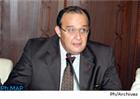
The Minister of Foreign Affairs and Cooperation, Mr. Taieb Fassi Fihri has presented, Friday evening, to the Committee in charge of Foreign Affairs, National Defense and Islamic Affairs, at the Chamber of Representatives, upon the request of parliamentary groups, a presentation about many issues, at the top of them the recent developments relating to the Moroccan Sahara issue and the Union project for the Mediterranean.
|
|
|
A new entity would expose the Maghreb region to fragmentation (Algerian journalist) 7/4/2008
The Algerian journalist writer, Mr. Anwar Malek has estimated that the creation of "a new entity in the Maghreb region would expose it to the emergence of countless other entities", adding that the Sahara issue "is a first step towards the erosion of the Maghreb region known for unity and cohesion between its peoples, who were behind liberation from the yoke of the occupants. "
|
|
|
Mauritanian victims of "Polisario" denounce torture in Tindouf camps 7/3/2008
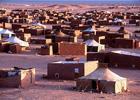
Some Mauritanians victims of arbitrary detention, torture and serious violations of human rights have delivered damning testimony on the plight lived in camps in Tindouf, Algeria, and the horrifying suffering under the command of "Polisario". In a press conference Wednesday in Brussels, victims have recounted in detail torture in "Polisario" prisons and the inhuman conditions of detention. The president of "The Mauritanian Association of Young Professionals of Nouadhibou," Ould Sidi Ould Cherif Tejdert, described the suffering experienced by Mauritanian prisoners in the Tindouf camps and families of missing persons, referring to the case of his brother disappeared since 1982.
|
|
|